How to start a mood journal (without making it a chore)
Not medical advice.
6 min read
A mood journal does not have to be a diary, a project or a habit tracker with streaks. It can be one minute at the end of the day. The goal is simple: notice how you feel, and leave a small trail so that you can look back and see it.
Why keep a mood journal at all
Moods move quickly, and memory is not a reliable witness. By Friday you may remember the week as "bad" because of one rough afternoon, or as "fine" because the last evening was pleasant. A few words written each day give you a more honest picture.
A journal also gives your feelings somewhere to go. Putting a word to a mood, even a rough one, can make it feel a little more manageable. You are not solving anything. You are noticing.
The one-minute method
Each day, write two things:
- One word for your mood. Tired. Hopeful. Scattered. Flat. Warm. Pick the closest word, not the perfect one.
- One line about the day. What happened, or what stood out. "Long meeting, nice walk after." That is enough.
That is the whole practice. If you want to add something, add it. If you do not, stop. A very small habit that you keep is far more useful than a big one that you drop in a week.
Choosing when and where
Pick a moment that already exists in your day and attach the journal to it. Some options:
- Last thing at night. Right after the lights go dim, as part of a wind-down routine.
- With a warm drink. After dinner or at the end of the afternoon.
- In the morning. A quick note about how you are starting the day, if evenings are too tired.
Keep the notebook or app where you will see it. If you have to hunt for it, you will not do it.
Three starter prompts
Some days you will stare at the page. Use one of these to get a word out:
- What took the most energy today?
- What was one small thing that went okay?
- What do I need more of tomorrow, or less of?
You do not have to answer all three. Pick the one that fits and write a line. If none fit, "I don't know" is an honest entry.
A weekly look-back
Once a week, maybe on Sunday, read through your seven entries. Do it slowly and with no judgement. Notice:
- Which words came up more than once?
- Which days felt lighter, and what was different about them?
- Is there anything you would like to repeat, or to change, next week?
You may find patterns you could not see from inside a single day. Perhaps Mondays are heavy, or a walk makes a difference. Notice it, and then let it go. This is reflection, not a report card.
Keep it yours
A journal works best when it is honest, and it is honest when you know it is private. Keep it somewhere only you look: a notebook in a drawer, or an app that does not share your writing.
Write what is true, even if it is messy. You are not writing for an audience. If you ever worry about someone reading it, it is fine to keep it brief or to tear out a page.
Common stumbling blocks
"I forgot for a week." Start again today. Do not go back and fill in the gap.
"My entries all say the same thing." That is information too. If every day is "tired", it may be worth asking what you need more of.
"Writing about feelings makes me feel worse." Keep it to facts and a single word for a while. You can stop at any time. A journal should feel supportive, not heavy.
When writing is not enough
A journal can help you notice and reflect, but it is not a substitute for support. If you find that your low days are getting more frequent or heavier, or you feel unsafe, please reach out to someone you trust or a professional. You can find a helpline for your country on our helplines page.
Start tonight
Put a pen and a small notebook by your bed, or open the notes on your phone. Tonight, write one word and one line. That is a mood journal. Tomorrow, do it again.
Making your words more useful
After a few weeks you might want a little more from your entries. Without making it a chore, you can add one tiny detail: a number from 1 to 5 for energy, or a single word for what you did that day (walk, work, rest, friends). Over time these small tags make patterns easier to spot.
Try not to judge the entries as good or bad. A "flat" day is not a failure. It is a day, honestly recorded, and that is exactly what a mood journal is for.
Common questions
What if I miss days?
Nothing breaks. Skip the gap and write the next day without catching up. A journal with holes is still useful.
Paper or an app?
Whichever you will actually open. Paper feels slower and more private. An app is always in your pocket and can remind you. Try one for a week.
Do I need to write full sentences?
No. One word and a short line is plenty. Fragments are fine, and nobody is grading it.
Try this in Aama
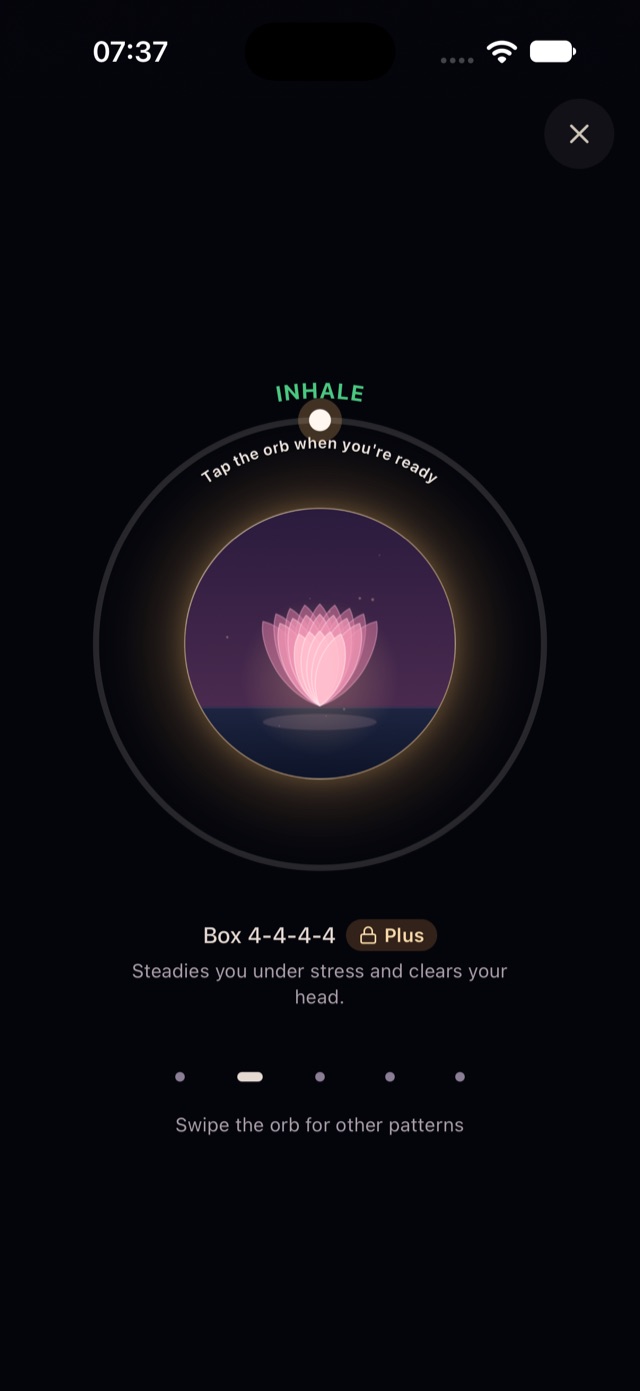
Breathing exercises, sleep sounds and a mood journal, in one quiet app for your phone. No ads inside.
Feeling unsafe? Get help now
Related guides
A slow 10-minute morning routine
A gentle way to start the day without grabbing your phone first: water, light, a few breaths and one intention.
Read the guide →4 min readThe 5-4-3-2-1 grounding exercise, step by step
Use your five senses to come back to the present moment. A simple, quiet exercise for when your mind is racing or spinning.
Read the guide →