A slow 10-minute morning routine
Not medical advice.
5 min read
Many of us reach for the phone before our feet touch the floor. Within a minute we are reading messages, news and other people's plans, and the day has been set before we have even arrived in it. A slow morning does not need to be long or fancy. Ten gentle minutes is enough.
Why the first minutes matter
The way you begin can set the pace for the day. A rushed start tends to make everything feel urgent. A slower start gives you a moment to arrive, so you can meet the day on your terms.
This is not about being productive. It is about being a little more settled before things begin.
The routine
You can do all of it or just one or two parts.
- Minutes 0 to 1: pause. Before you pick up your phone, lie still and take three slow breaths. Feel the bed under you.
- Minutes 1 to 3: water and light. Drink a glass of water. Open the curtains or step by a window, and let daylight reach your eyes.
- Minutes 3 to 5: move a little. Stretch your arms overhead, roll your neck, reach for your toes. Slow and easy.
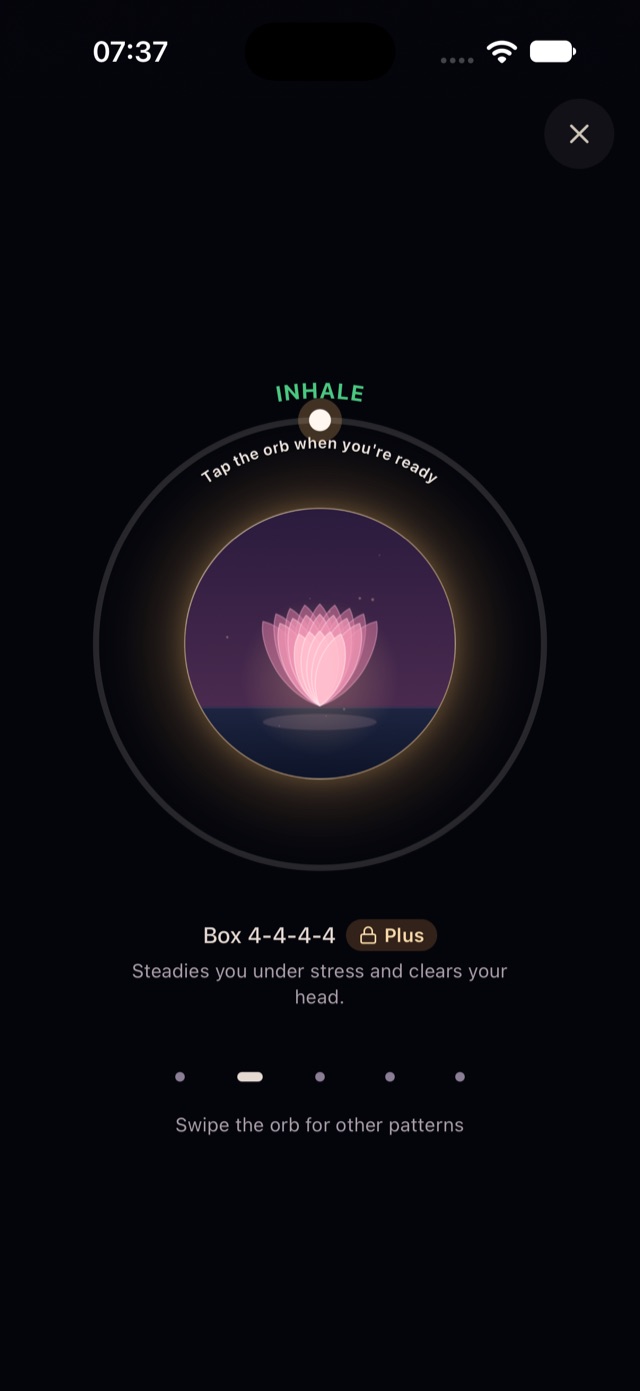
- Minutes 5 to 8: breathe. Sit and breathe in for four, out for six, ten times. The breathing timer can help if you like a guide.
- Minutes 8 to 10: one intention. Ask: how do I want to be today? Pick a simple word or phrase, such as "steady" or "patient", or note the one thing that matters most.
If you keep a journal, one word and one line fits well here. See how to start a mood journal.
Making it stick
Prepare the night before. Put a glass of water by the bed and leave your phone across the room, charging.
Start tiny. Begin with only water and three breaths. After a week, add one more step.
Be flexible. Some mornings are chaotic, and that is fine. A shorter version still counts. Do not turn it into another thing to fail at.
What to do when the routine falls apart
Some mornings will not go to plan: you oversleep, a child wakes early, or something urgent comes up. That is normal, and it does not mean the routine has failed.
On those mornings, choose a single anchor. A glass of water, or three slow breaths before you check your phone, takes under a minute. It is a small way of telling yourself that you are still looking after the start of your day.
Try not to catch up the next day or make up for what you missed. Just begin again with whatever time you have. A routine is something you return to, not something you keep perfectly.
Ideas to make it your own
The ten-minute version is a starting point. You can swap any step for something that suits you better:
- Instead of stretching: a slow walk around the house, or ten slow knee lifts.
- Instead of a glass of water: a warm drink, with no screen, while you look out of a window.
- Instead of an intention: a line in your journal, or a gratitude note for one small thing.
- Add some quiet music or a soft sound. A low tone or gentle rain can make the first minutes feel softer.
Think of the routine as a small garden. Plant one thing, see how it grows, and add the next when you are ready.
When mornings are hard
For some people, mornings are the heaviest part of the day. You wake up with a weight, or a flood of thoughts before you are even out of bed. If that is you, the routine above may feel like too much, and that is fine.
Try one thing only: before you do anything else, place a hand on your chest or stomach and take three slow breaths. Tell yourself, "I only need to do the next small thing." Then get a glass of water. That is enough.
If hard mornings are frequent, or they stay with you through the day, please speak to someone you trust or a professional. You can find support on our helplines page.
A short version for busy weekdays
On weekdays, ten minutes may feel luxurious. A three-minute version keeps the spirit of the routine. Drink a glass of water by a window. Take five slow breaths. Name one thing you want to do well today. Then begin.
You can also use a moment you already have: while the kettle boils, as you brush your teeth, or on the first minute of your commute. These small gaps are easy to overlook, and they add up to a morning that feels a little more your own.
Evenings help mornings
A calmer morning often starts the night before. A short routine like winding down before bed helps you arrive in the morning with more ease.
A note
This is a gentle everyday habit. It is not medical advice. If mornings feel very hard for a long time, it can help to speak to a doctor or someone you trust.
Common questions
What if I only have five minutes?
Do water, light and three slow breaths. That is a perfectly good short version.
Do I have to avoid my phone completely?
No, but try to wait ten minutes before checking it. Even a short delay can make the start of the day feel less rushed.
What if I am not a morning person?
You do not need to be. The routine is meant to be slow and light. Start with one step and add more only if you like.
Try this in Aama
Breathing exercises, sleep sounds and a mood journal, in one quiet app for your phone. No ads inside.
Feeling unsafe? Get help now
Related guides
The 5-4-3-2-1 grounding exercise, step by step
Use your five senses to come back to the present moment. A simple, quiet exercise for when your mind is racing or spinning.
Read the guide →5 min readA gentle check-in for a heavy day
When everything feels heavy, here is a slow, kind way to check in with yourself, with small steps for the next hour.
Read the guide →