4-7-8 breathing: a simple step-by-step guide
Not medical advice.
6 min read
When your mind is racing, a slow breath is one of the few things you can do right away, anywhere, without any equipment. The 4-7-8 pattern is a simple way to slow things down. It takes about a minute to try, and you do not need to believe in it for it to be a useful pause.
What 4-7-8 breathing is
It is a counted breathing pattern with three parts. You breathe in for 4 seconds, hold for 7, and breathe out for 8. The long, slow exhale is the point. It gives your body a clear signal to ease off.
The pattern was popularised by a doctor who drew on older breathing practices from yoga. You do not need to know the history to use it. What matters is the shape: a short breath in, a gentle pause, and a much longer breath out.
People use it in the evening to wind down, before a hard conversation, or in the middle of a stressful day. It is, at the very least, one minute where your attention has something simple to do instead of running through a list of worries.
Why a long out-breath feels calming
Most of us breathe quickly and high in the chest when we feel hurried. Slowing the breath, and especially lengthening the exhale, tends to make the body feel less hurried too. You can notice this for yourself: breathe out slowly for a few seconds and see whether your shoulders drop.
There is no need to overthink the science. The practical idea is simple. A slow, counted breath gives your mind a clear and gentle task, and gives your body a steady rhythm to follow.
How to do it, step by step
Find a place where you can sit comfortably. Rest your hands in your lap and let your shoulders drop. Rest the tip of your tongue lightly behind your upper front teeth, where it naturally sits when you say the letter "n". Keep it there for the whole exercise.
- Breathe out completely through your mouth, with a soft whoosh.
- Close your mouth and breathe in quietly through your nose for a count of 4.
- Hold your breath gently for a count of 7.
- Breathe out through your mouth for a count of 8, with the same soft whoosh.
- That is one round. Without pausing, breathe in again for 4.
- Repeat for four rounds, then breathe normally and notice how you feel.
Count slowly in your head: one-one-thousand, two-one-thousand. The exact speed matters less than keeping the 4, 7 and 8 in the same proportion. If the full counts feel too long, shorten each one (for example 3-5-6) and keep the exhale the longest.
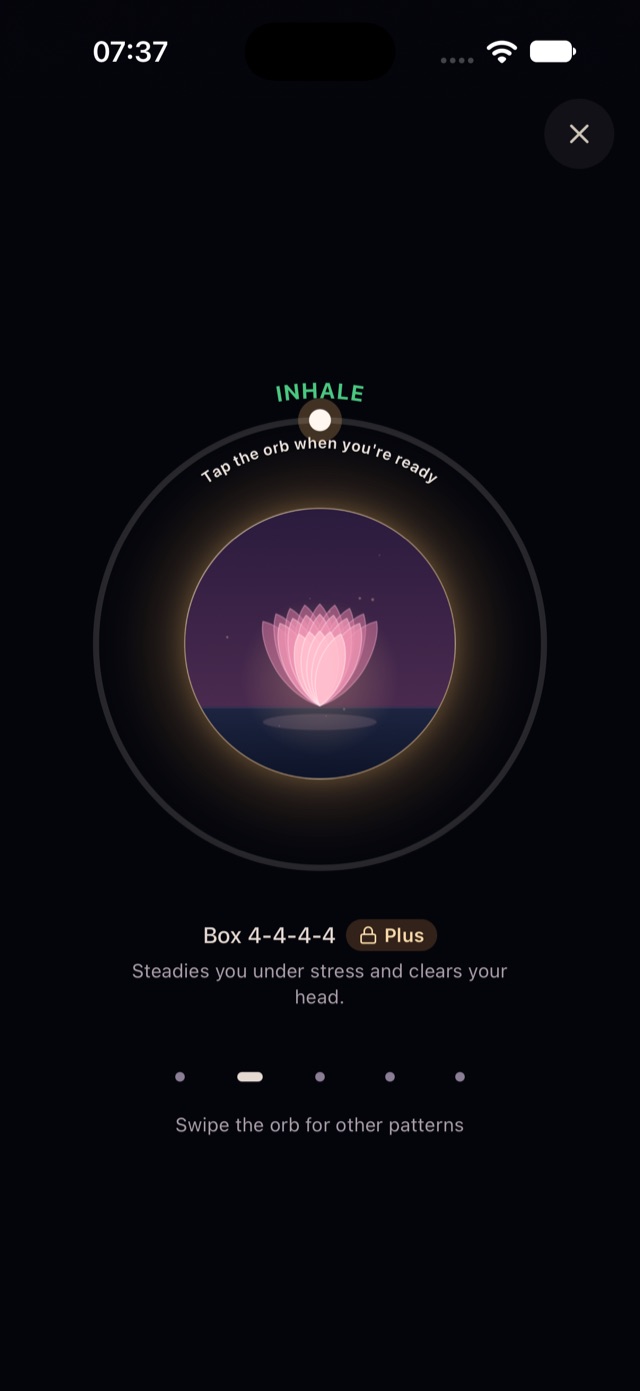
The breathing timer on this site shows the pace with a circle, so you do not have to count.
Common mistakes
Breathing too hard. This is not a deep, gasping breath. Keep it quiet and easy. If you hear yourself, soften it.
Holding too tight. The hold should feel like a pause, not like clenching. Keep your face, jaw and shoulders loose.
Doing too many rounds at first. Four rounds is plenty. More is not better, and a long session can leave you feeling lightheaded. Build up slowly over days.
Making it a test. If your mind wanders, that is normal. Notice it and come back to the count. There is no way to get this wrong.
Rushing the exhale. The out-breath is the longest part for a reason. If you find yourself running out of air, shorten the whole pattern rather than cutting the exhale short.
When to stop
If you feel dizzy, lightheaded or uncomfortable at any point, stop and breathe normally. Sit for a minute until you feel steady. Try a shorter pattern next time, or fewer rounds.
If dizziness or discomfort keeps happening, or if you have a breathing or heart condition, please talk to a doctor or another professional before continuing. Breathing exercises are a gentle everyday habit. They are not medical care.
Fitting it into your day
The best time to practise is whenever you will actually remember. A few ideas that work for many people:
- When you get into bed. Four rounds before you reach for the sleep sounds.
- Before a meeting or a phone call. One round, just to arrive.
- After a stressful message. Take a breath before replying.
- While a kettle boils. It is almost exactly one round and a half.
Pairing the breathing with something you already do removes the need to remember. After a week or two it can start to feel like a natural pause.
A tiny starter plan
For the first week, try four rounds once a day at the same time. Many people pick the moment they get into bed, or right after putting the phone down. After a week, see if you want a second session earlier in the day.
Keep it light. The aim is a bit more calm, not a perfect technique. If you would like a different shape, you could also try box breathing, which uses even counts, or follow a full wind-down routine in the evening.
Common questions
How often can I do 4-7-8 breathing?
Many people do four rounds once or twice a day, or in the evening when they want to wind down. Start small and see how it feels.
Should I sit up or lie down?
Either works. Sitting with your back supported is easiest when you are learning. Lying down is fine if you are doing it at bedtime.
Will it make me sleepy?
It can feel calming and some people feel relaxed afterwards. It is not a guarantee, and it is not a replacement for good sleep habits.
Try this in Aama
Breathing exercises, sleep sounds and a mood journal, in one quiet app for your phone. No ads inside.
Feeling unsafe? Get help now
Related guides
A slow 10-minute morning routine
A gentle way to start the day without grabbing your phone first: water, light, a few breaths and one intention.
Read the guide →4 min readThe 5-4-3-2-1 grounding exercise, step by step
Use your five senses to come back to the present moment. A simple, quiet exercise for when your mind is racing or spinning.
Read the guide →